The Future of Work: Where AI and Humans Move Together
The organizations that thrive won't separate AI and humans. They'll move them together.

Leandro & Daniel
The Future of Work: Where AI and Humans Move Together
The narrative is grim. AI will displace workers. Automation will eliminate jobs. The future is humans replaced by machines.
This narrative is both true and false.
It’s true that some jobs will change. It’s true that some roles will be displaced. But here’s what’s often missed: The future belongs to organizations where AI and humans move together, not separately.
The Two Futures
Future One: AI Replaces Humans
In this timeline:
- Organizations see AI as a way to eliminate expensive headcount
- People are treated as costs to be minimized
- Work becomes more fragmented and less human
- Organizations become efficient at producing things nobody wants
- The best talent leaves for companies that value them
This future is possible. But it’s not inevitable. And ironically, it’s usually terrible business strategy.
Future Two: AI Elevates Humans
In this timeline:
- Organizations see AI as a way to amplify what humans do best
- People focus on judgment, creativity, strategy, relationships
- AI handles routine, repetitive, pattern-matching work
- Work becomes more meaningful and strategic
- The best talent is attracted to organizations that empower them
This future is also possible. And it’s usually better business strategy.
What Humans Do Better Than AI
This is worth being explicit about:
Judgment under uncertainty: Humans make decisions with incomplete information. We use intuition, experience, and context. AI can help surface data, but humans ultimately decide.
Creativity and ideation: Humans imagine what doesn’t exist yet. We connect dots in unexpected ways. We create things that solve problems nobody else saw.
Relationship building: Humans form trust. We empathize. We negotiate. We inspire. AI can’t do this (yet, and maybe never).
Ethical reasoning: When values conflict, humans navigate. AI can follow rules, but it doesn’t understand the weight of tradeoffs.
Adaptation to the novel: When something completely new happens, humans adapt faster than systems. We’re built for change.
What AI Does Better Than Humans
This matters too:
Processing large amounts of data: Humans can hold maybe 7 things in working memory. AI can analyze millions of data points in seconds.
Finding patterns: AI finds statistical patterns humans miss. It’s tireless and objective (in a mathematical sense).
Consistency: AI doesn’t have bad days. It doesn’t get distracted. It executes the same way every time.
Speed: AI is fast at computational tasks. A calculation that takes a human an hour takes AI milliseconds.
Scale: One AI model can serve millions of users. One human can serve dozens.
The Future: Complementary, Not Competitive
The organizations winning in the future are those that stop asking “AI or humans?” and start asking “humans AND AI, how?”
This changes everything:
For strategy: Instead of “How do we use AI to eliminate jobs?” → “How do we use AI to let people focus on the most valuable work?”
For job design: Instead of “What job can AI completely replace?” → “What parts of this job can AI handle so humans focus on judgment and strategy?”
For hiring: Instead of “How many people can we cut?” → “What new capabilities do we need as AI handles routine work?”
For culture: Instead of “AI is a threat” → “AI is a tool we’re learning to use well”
What This Looks Like in Practice
Example 1: Customer Support
Old model: Humans answer every question AI replacement model: AI chatbots replace humans
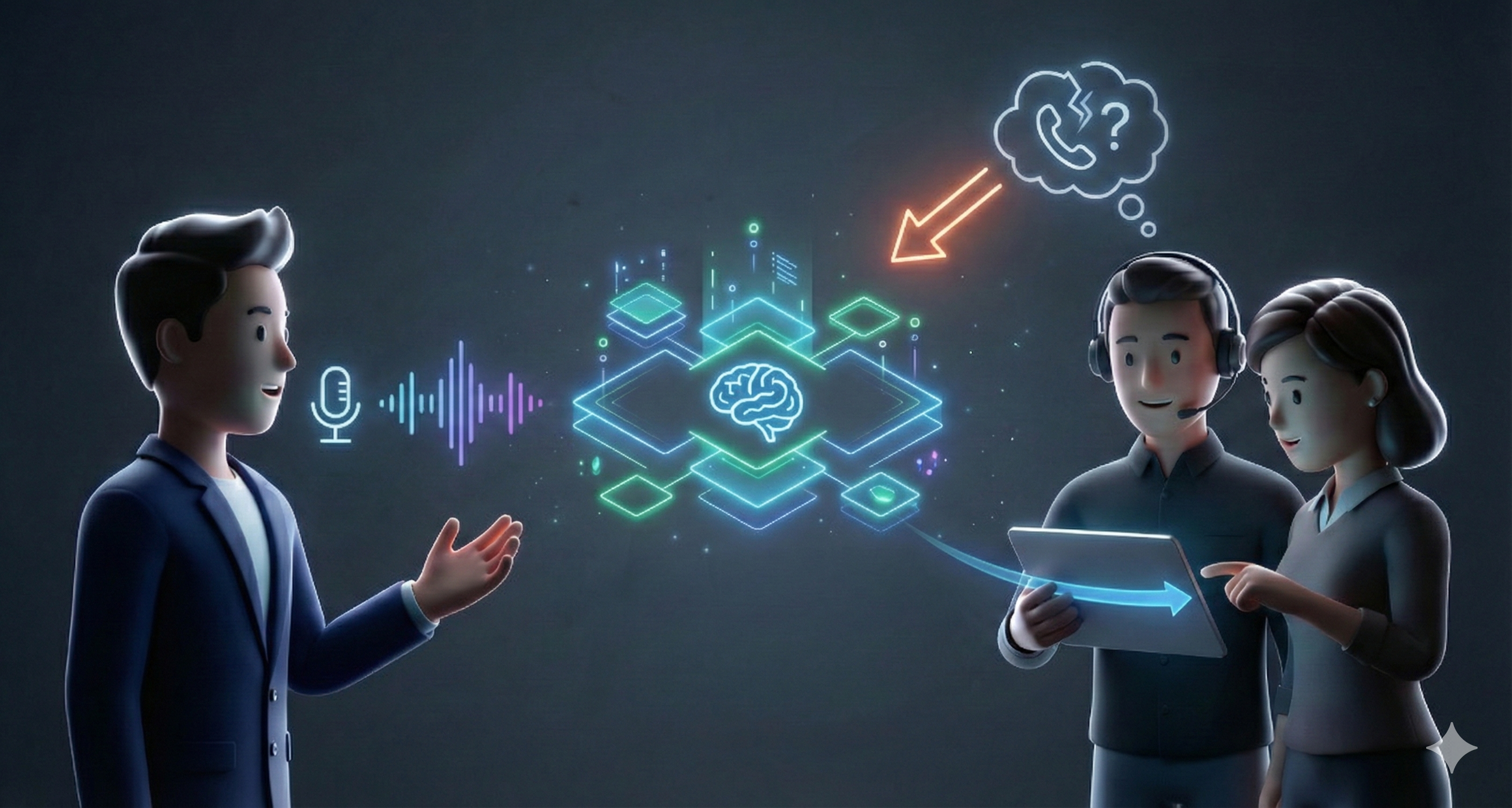
Future model: AI handles routine questions (order status, billing, FAQs). Humans handle complex, emotional, strategic conversations (angry customers, product feedback, opportunities).
Result: Support team is smaller but more skilled. Handling complex issues. Creating value. More engaged.
Example 2: Strategic Planning
Old model: Executives hold meetings to analyze data, then decide AI-elevated model: AI analyzes historical data, identifies trends, surfaces options. Executives focus on judgment, strategy, and gut-feel about the future.
Result: Faster decisions. Better informed. Executives doing what only they can do.
Example 3: Product Development
Old model: Engineers build, QA manually tests, release happens AI-elevated model: AI handles automated testing, code review, routine bug detection. Engineers focus on architecture, innovation, and solving hard problems.
Result: More features shipped. Higher quality. Engineers more engaged.
The Skills the Future Requires
If AI is handling the routine, what do humans need to be good at?
AI literacy: Understanding what AI can and can’t do. How to work with it. How to evaluate it.
Judgment: Making decisions when there’s no clear right answer. Balancing competing priorities.
Curiosity: Asking new questions. Imagining new possibilities. Not accepting “that’s how we’ve always done it.”
Communication: Explaining complex things clearly. Influencing others. Building understanding.
Adaptability: Learning quickly. Comfortable with change. Able to shift when the context shifts.
These skills are human skills. They can’t be automated.
The Bigger Picture
This isn’t about whether AI is good or bad. It’s about how organizations choose to use AI.
The future of work doesn’t have to be grim. It can be:
- More human, not less
- More strategic, not more automated
- More engaging, not more fragmented
- More prosperous, because when you elevate your people, they create more value
But it requires leaders to make a choice: Will we use AI to replace people, or to elevate them?
What’s Next for Organizations
If you want to build the future where AI and humans move together:
-
Talk to your people. What parts of their job do they hate? Where do they feel like they’re just executing? That’s where AI can help.
-
Pilot and learn. Don’t overhaul everything. Try using AI to handle routine work in one team. See what happens. Learn.
-
Reskill deliberately. As AI takes on routine work, invest in developing the judgment, creativity, and relationship skills your people need next.
-
Communicate the vision. People aren’t afraid of AI. They’re afraid of irrelevance. Show them they’re not irrelevant in this future.
-
Measure what matters. Don’t measure “people saved.” Measure “value created,” “customer satisfaction,” “employee engagement.”
The Opportunity
The organizations that figure out how to move humans and AI together will have an unfair advantage:
- Better products (judgment + data)
- Happier customers (strategic attention + scale)
- Engaged employees (less drudgery, more meaning)
- Faster adaptation (human creativity + AI scale)
- Better culture (we’re moving forward together)
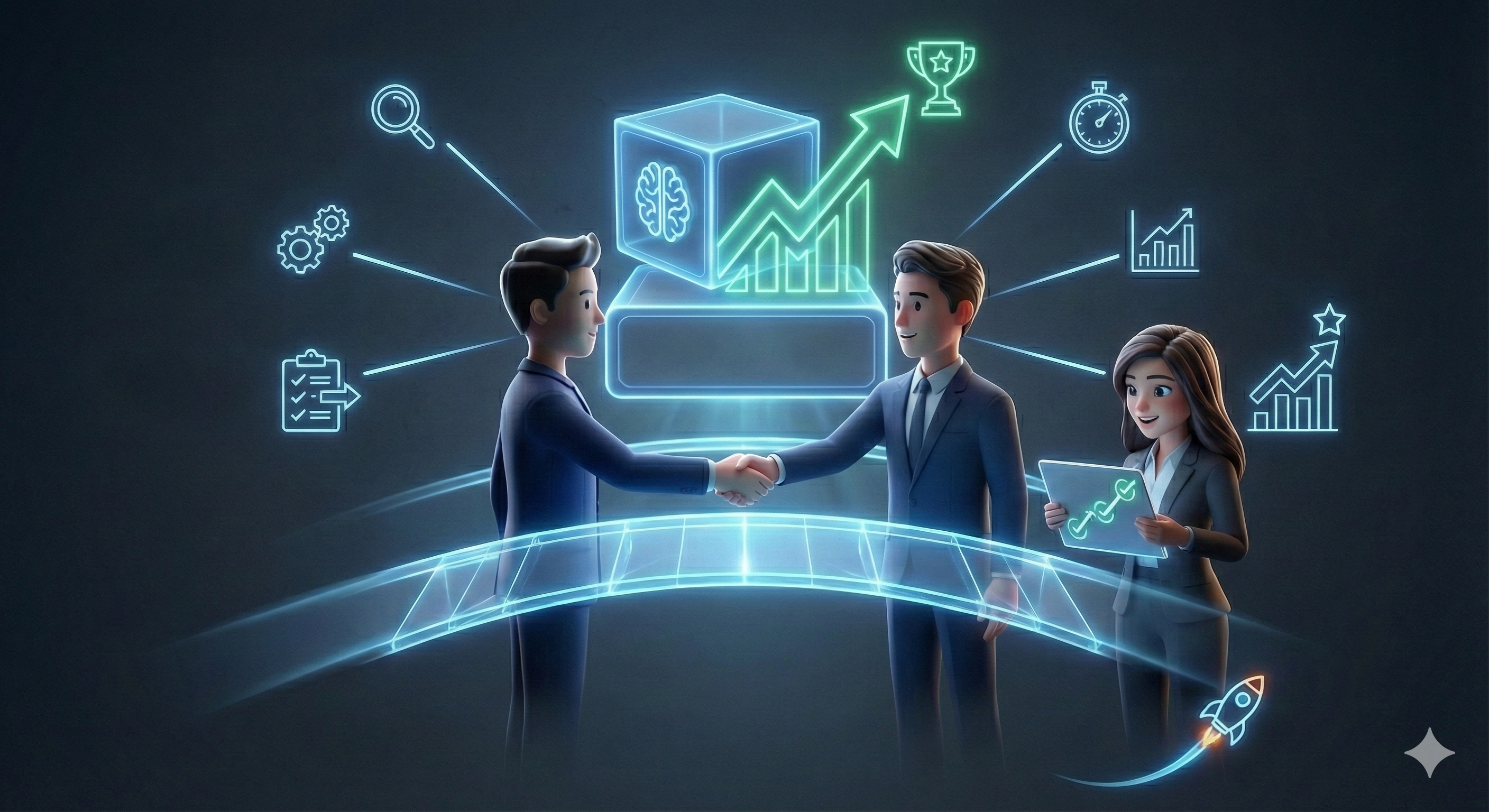
The future of work isn’t written yet. But the organizations that win will be those where AI and humans aren’t competing.
They’re moving together.
What’s one part of your job that AI could handle so you could focus on what only you can do? Start there.
Tagged with: